WholeFrame Organizational Diagnostic
See how your organization actually works — and what is shaping performance.
WHOLEFRAME DIAGNOSTICS
The WholeFrame Organizational Diagnostic is an evidence-based examination of how work gets done across your organization. It brings together evidence from people, systems, organizational records and direct observation to identify significant conditions, understand how they connect, and show leaders where attention is most likely to make a meaningful difference.
When the problem is visible, but the cause isn't
Organizations rarely seek a diagnostic because everything is working as intended.
More often, leaders can see the effects of a problem — recurring delays, inconsistent performance, strained handoffs, competing priorities, capacity concerns or issues that keep returning — but the underlying conditions are harder to see.
The WholeFrame Organizational Diagnostic is designed for situations where understanding why something is happening needs to come before deciding what to change.

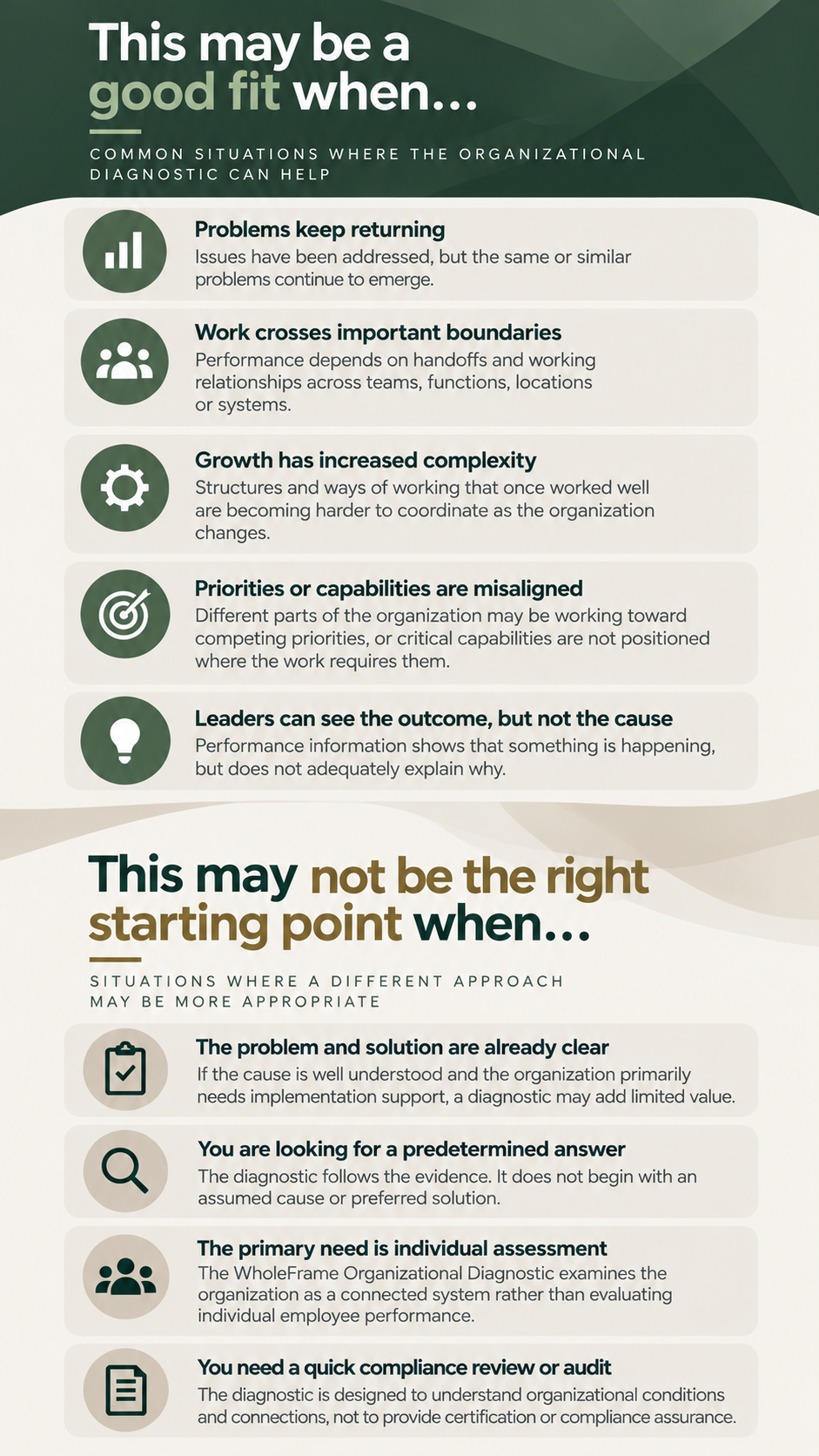
Recurring Problems
Issues are addressed, but the same or similar problems continue to return.

Cross-Team Friction
Handoffs, dependencies or working relationships create delays, rework or confusion.

Growth & Complexity
Structures and ways of working that once worked well are struggling as the organization changes.
Competing Priorities
Teams or functions are working toward legitimate objectives that conflict in practice.


Capability Constraints
Critical knowledge, experience, authority or resources may not be positioned where the work requires them.

Unexplained Performance
Leaders can see the outcome in performance data, but the organizational conditions producing it are not yet clear.
The organization is examined as a connected system.
The WholeFrame Organizational Diagnostic does not examine people, processes or performance in isolation. It looks at how the organization’s capabilities, systems, structures and working relationships interact to shape how work actually gets done.

People & Capabilities
The knowledge, experience, judgment, authority and resources available to perform the work — and whether they are positioned where they are needed.

Systems & Work
The processes, tools, technology, structures and operating systems through which work is organized and carried out.

Interdependencies
The handoffs, dependencies and critical working relationships through which different parts of the organization rely on one another.

Organizational Conditions
The priorities, expectations, decision structures and operating context that influence how people and systems behave in practice.
The diagnostic examines both the individual parts of the organization and the connections between them.
How the WholeFrame Organizational Diagnostic works
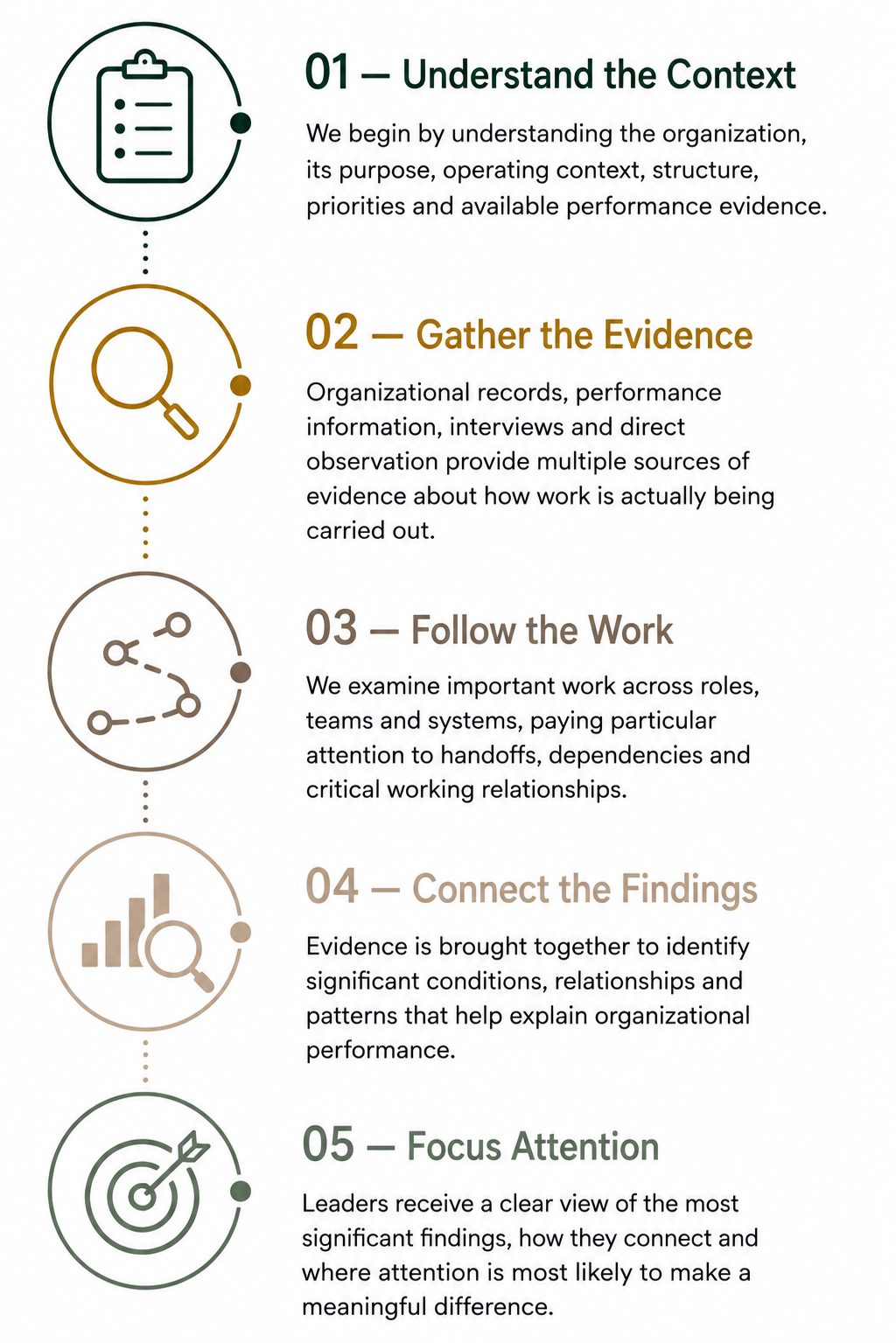
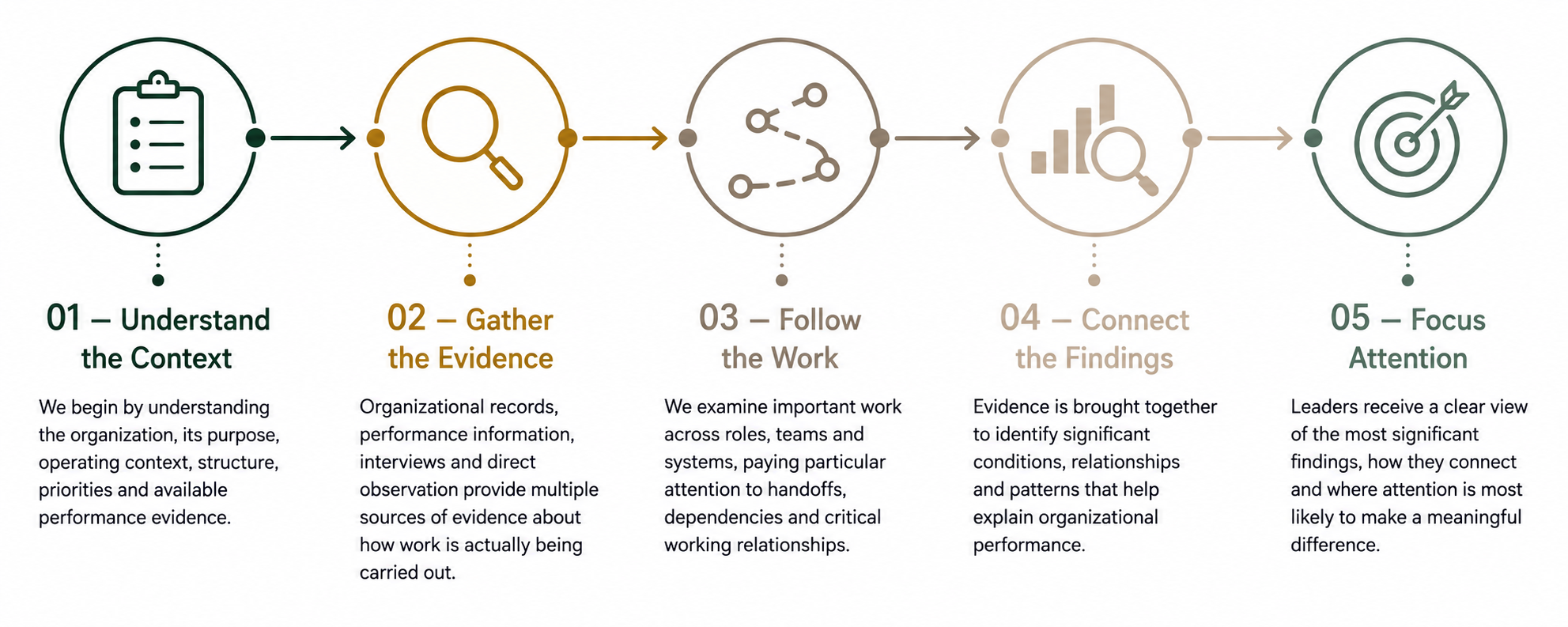
The diagnostic follows a structured evidence-based process that moves from understanding the organization and its context, through field investigation and analysis, to a clear executive readout of what the evidence shows.
The result is not a list of isolated observations. It is an evidence-based picture of how the organization is working as a system.
What you receive
The WholeFrame Organizational Diagnostic translates the evidence gathered during the engagement into a clear, structured view of what is happening across the organization and where leadership attention may have the greatest value.

Client Diagnostic Report
A structured written report that brings together the significant findings from the diagnostic, the evidence supporting them, how conditions connect across the organization, and the areas warranting leadership attention.
Significant findings
What the evidence indicates is materially affecting the organization.
Supporting evidence
The evidence base underlying the findings.
Organizational connections
How findings and conditions relate across the organization.
Sequence of attention
A structured view of where leadership attention should begin.

Executive Diagnostic Readout
A facilitated executive discussion of the diagnostic findings, what the evidence indicates, how significant conditions relate to one another, and where leadership attention is most likely to make a meaningful difference.
60–90 minute executive session
A focused discussion with organizational leadership.
Evidence-led discussion
Findings are discussed in relation to the evidence supporting them.
Connections between findings
How significant conditions interact across the organization.
Leadership discussion
Time to explore the findings, ask questions and clarify what the evidence means.
What an engagement looks like
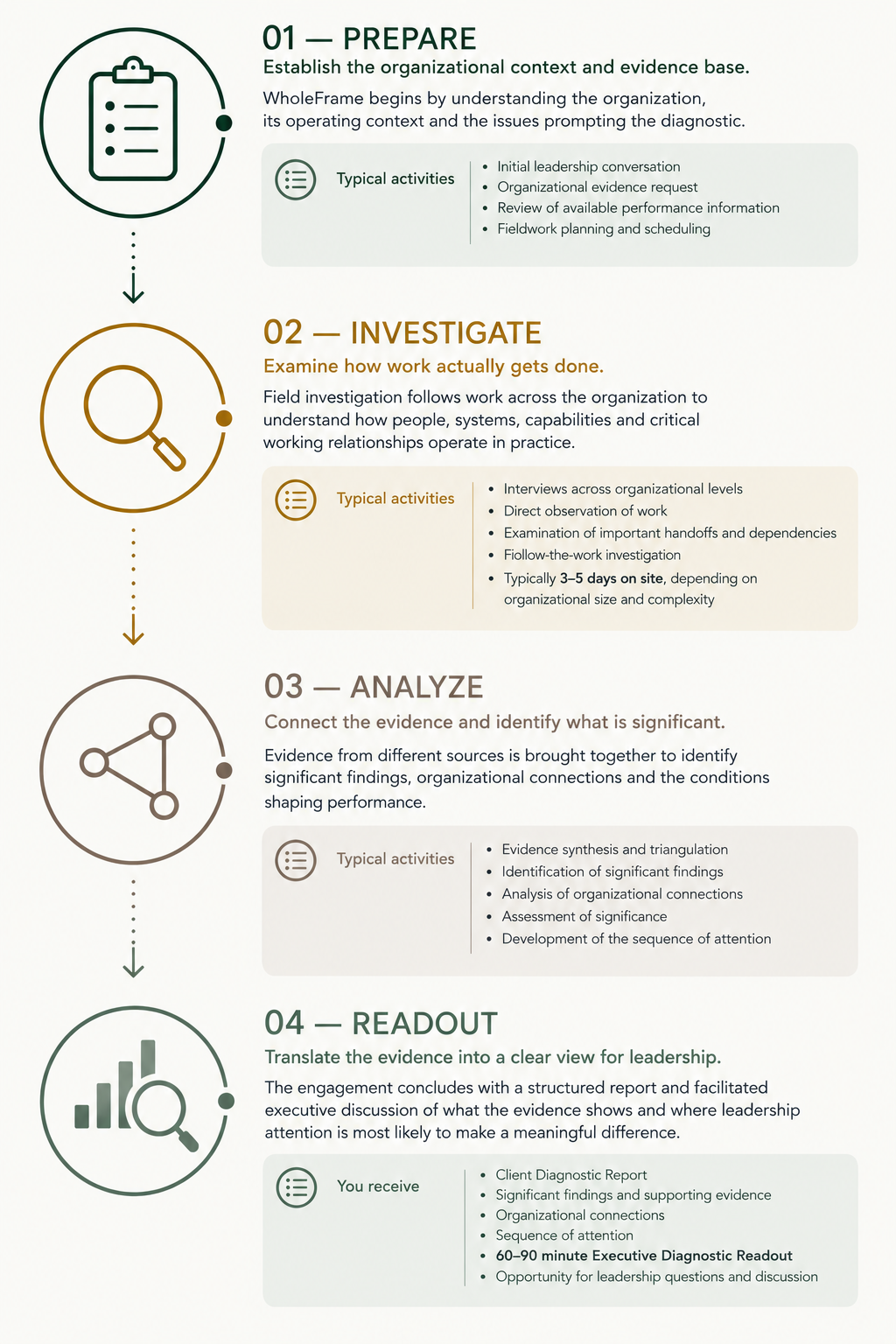

A WholeFrame Organizational Diagnostic is typically completed over 4–6 weeks, depending on organizational size and complexity, combining preparation, evidence review, on-site investigation, analysis and an executive readout.
The engagement is designed to build an evidence-based understanding of the organization before determining what, if anything, should change.
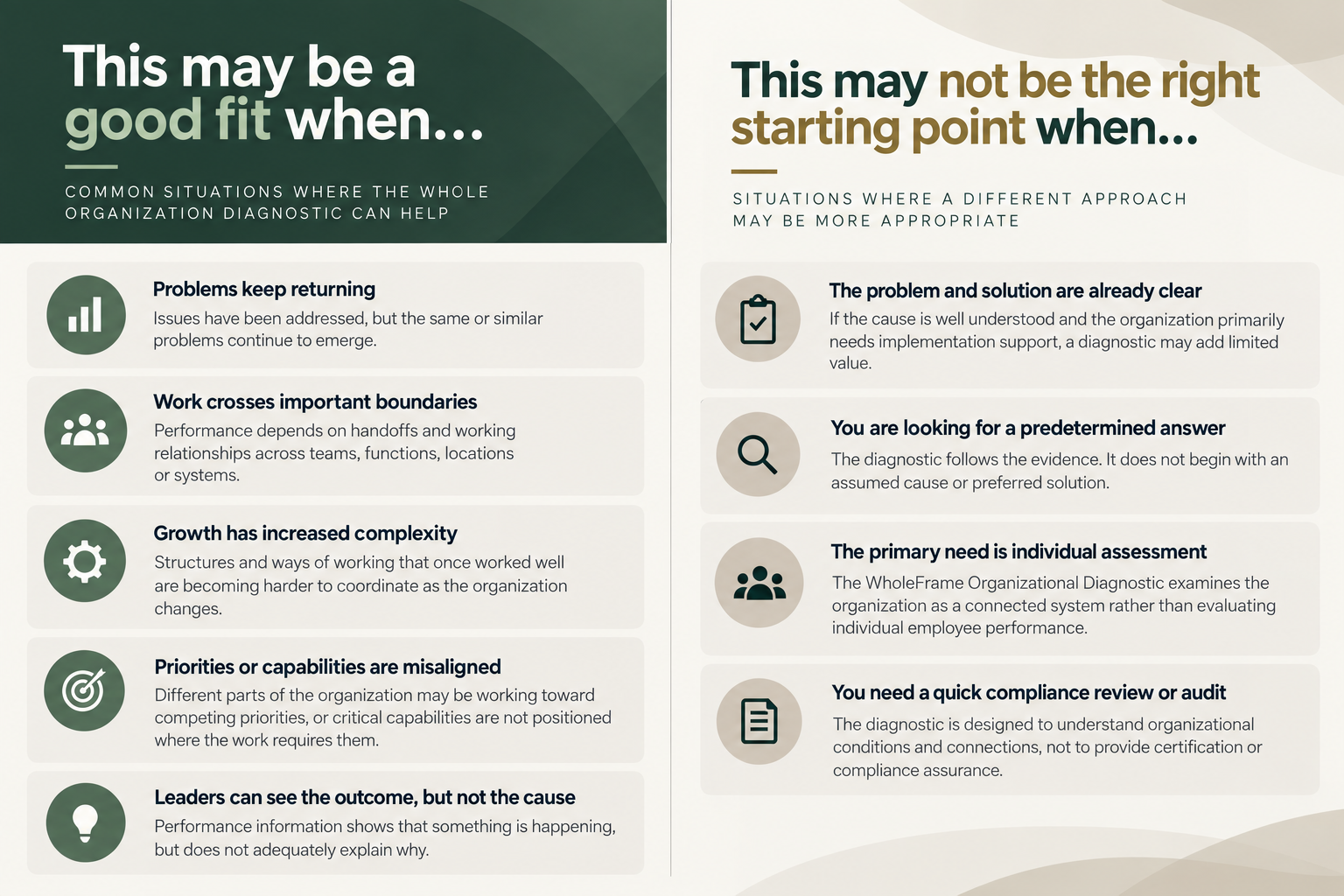
Is the WholeFrame Organizational Diagnostic right for your organization?
The WholeFrame Organizational Diagnostic is designed for organizations that know something is affecting performance but need a clearer understanding of the conditions producing it before deciding what to change.